

A renovation company posts its work on Instagram and leaves a contact phone number. Someone writes to ask for information. The person who handles messages is busy, replies hours later and, if the conversation moves forward, notes the contact in a diary or in Excel to remember it later.
We have seen this journey in renovation, removal and travel companies. Social media helps bring in enquiries, but answering every message, spotting who really wants to hire and following up takes time. When everything depends on someone keeping an eye on their phone, some opportunities go unanswered.
The question isn’t how many contacts come in, but what happens to them after the first message.
The problem isn’t using WhatsApp or Excel
WhatsApp makes a first conversation easy. Excel can help organise contacts. The problem appears when the two of them have to carry the whole sales process: answering repeated questions, collecting the customer’s details, agreeing on a call, remembering what they need and deciding when to write to them again.
On top of that, the information usually ends up scattered. One person remembers what was said on the phone, another has a message on Instagram and the basic details are in a sheet nobody has updated. If the customer asks again, the team has to piece the conversation back together before it can help.
Publishing a website and waiting isn’t enough either. The website can explain the services and build trust, but it needs a clear path so that a visit becomes a conversation and that conversation reaches the right person.
What should happen when someone asks about your services?
 Imagine someone visits a renovation company’s website outside business hours. They want to know whether the company works in their area, what kind of projects it does and how to request a visit.
A well-prepared lead capture flow could:
- Show them the services and answer their first questions.
- Ask them what work they need and when they would like it done.
- Offer them a call or show them the available times to request an appointment.
- Record their details, with their consent, so the team can continue the conversation.
- Let the company view the opportunity and follow it up from its CRM.
The same principle works for other businesses, even if the questions change. A removal company will need to know the origin, the destination and an approximate date. A travel agency will want to know the destination, the number of travellers and what kind of experience they are looking for. The aim is to ask only for the information that helps take the next step.
It isn’t about a tool deciding on the salesperson’s behalf who deserves a reply. It is about handling the first enquiry and giving the team the context it needs to respond better.
What if the person doesn’t want to talk to sales yet?
Not every enquiry comes with the same intent. Some people want to hire soon; others are comparing options or trying to understand how much a service might cost.
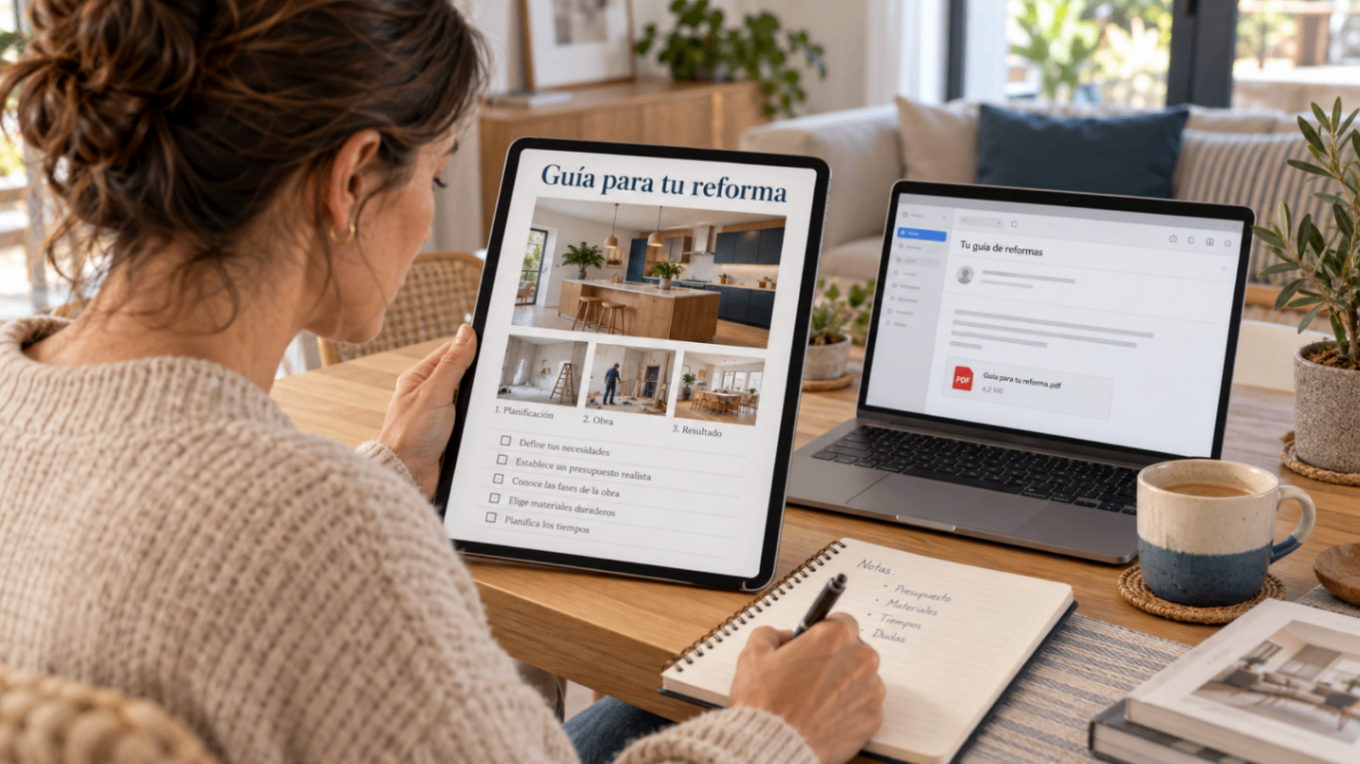
It is worth looking after these people too. If they find it useful, they can request a guide or an information pack and receive it by email. A renovation company, for example, could prepare an explanation of its working process, the types of work it does and the information needed to request a quote. That way, the visitor gets answers without having to wait for a call.
That content must genuinely help. Sending a generic PDF just to get an email address adds little. It is better to answer the questions the team gets every week and make clear how to get in touch when the person is ready to move forward.
This doesn’t mean every contact should receive sales messages indefinitely either. The company needs to explain what it collects the data for and respect each person’s preferences.
Follow-up starts after the first contact
Capturing an enquiry is of little use if nobody knows what happened to it afterwards. That is why the process must continue somewhere the team can see what each person needs and what the next step is.
You don’t need to start with a complicated system. Useful follow-up can distinguish between:
- New enquiries.
- Pending conversations.
- Scheduled calls.
- Proposals sent.
- Closed opportunities.
Each contact should have someone responsible and a specific next action.
Think of someone who asks about a renovation, books a call and asks for a proposal. If a week later they haven’t replied, the team should be able to find that conversation without digging through old messages and remember that it is time to follow up.
Automation can flag a new enquiry or make booking easier. Decisions about the quote, the commercial relationship and closing the deal still need a person.
Can this process be built with different tools?
Yes. A company can use a meeting tool such as Calendly, a CRM such as Holded or a lead capture and customer service platform such as HubSpot. These solutions meet real needs and some already combine several functions.
For many companies, starting with one of them will be enough. If the team already answers enquiries well and only needs customers to choose a time, a booking tool can solve the immediate problem. If what fails is sales follow-up, it may need to organise its contacts and opportunities first.
The point is to check whether the whole journey works in its case:
Where does the enquiry come from? Who handles it? Where is it recorded? Who takes care of the next step?
If several tools are needed, it is worth defining how they connect and who will maintain the process when services or the team change.
Before choosing software, it is worth mapping that journey with a real enquiry. What did the customer ask? How long did it take them to get a reply? What information did they have to be asked for again? Was a call agreed? Who was supposed to write to them afterwards? The answers show where time is lost and which part of the work is worth improving first.
A website that also helps you work
At FEIDERS we see the website as part of that process. Depending on what the business needs, we can combine the presentation of services with a 360 AI Agent that handles enquiries, a calendar for requesting appointments and a CRM for following up opportunities from the same environment.
The agent can guide the visitor and help them find a time. The booking is confirmed when the person completes the corresponding form. And if the company wants to send an information pack, that resource and the email that delivers it must be prepared as part of the lead capture flow.
Having these capabilities connected can simplify day-to-day work: the website explains, the conversation gathers the context, the calendar makes the next meeting easier and the CRM helps the team keep track. That doesn’t mean every company needs every module from day one. The solution must match the volume of enquiries and each business’s real way of selling.
Technology doesn’t replace a good offer or the human touch with the customer. But it can stop every enquiry depending on remembering a message, copying data into a sheet and then finding time to reply.
If you currently get contacts through social media or by phone, start by reviewing what happens from the first message to the follow-up. That will show you which parts are worth organising and which are worth automating.
Tell us how enquiries reach your company and what happens next. We can help you design a solution that fits the way you work.